Bioconjugate services
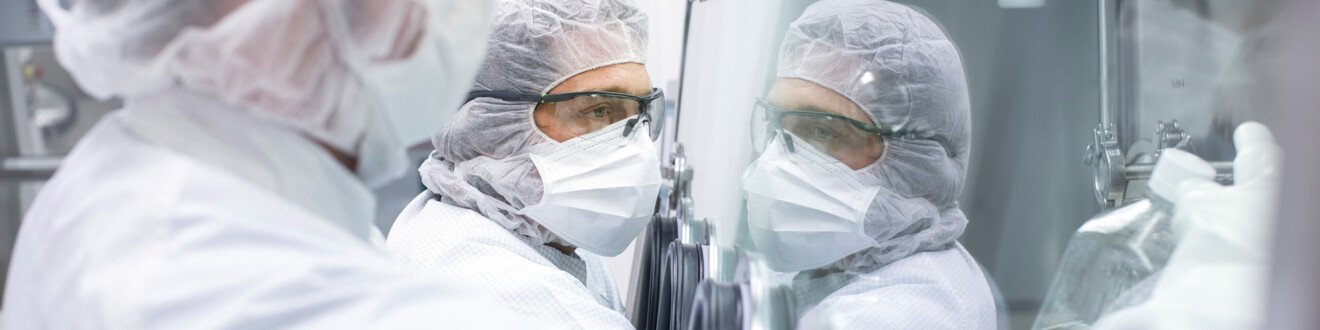
ADCs / bioconjugates pose a complex challenge from a development and manufacturing perspective. We offer a complete end to end solution that simplifies the value chain and accelerates the timeline to the clinic or the market.
Our full-service offering for bioconjugation services and ADCs provides you with:
- Early de-risking and optimization
- Bioconjugates process development and optimization
- Formulation development
- Analytical development
- Targeting agent or carrier protein
- Drug substance manufacture
- Drug product manufacture
- Payload and linker manufacturing
Commercialize your drug candidate
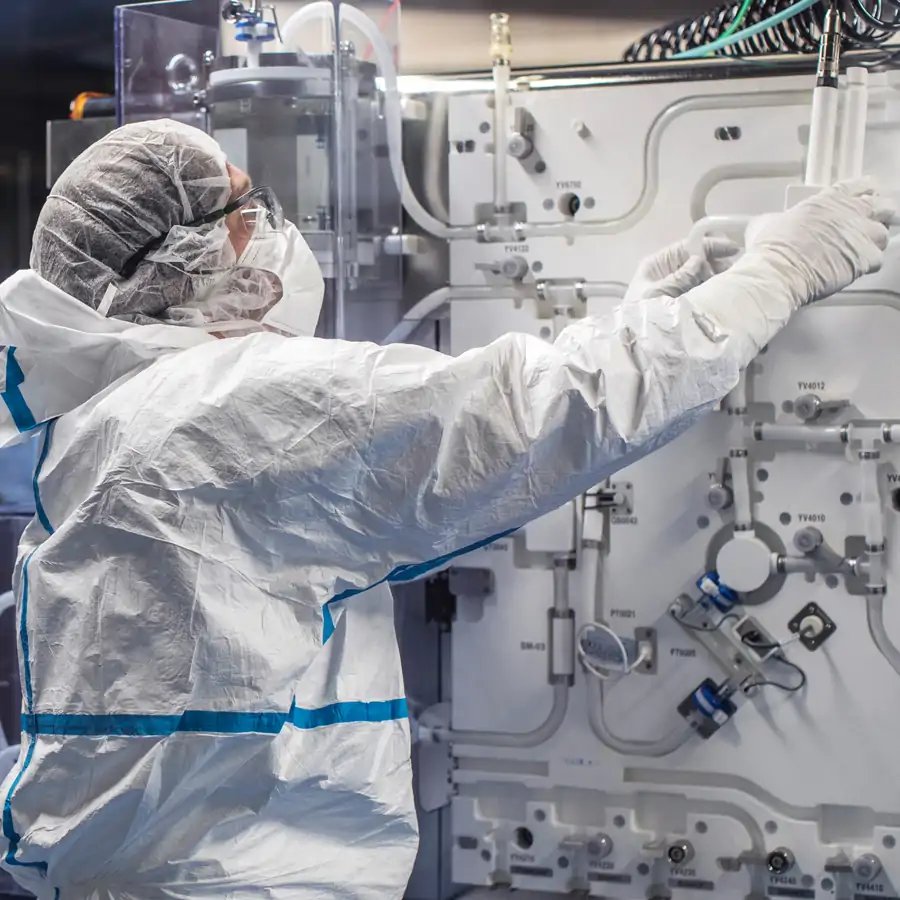
We have a successful track record of marketed bioconjugates, providing support through all stages of the lifecycle from concept to commercialization.
Our experience spans a broad range of technologies including:
- ADCs
- AOCs (Antibody Oligonucleotide Conjugates)
- Antibodies conjugated to nanoparticles (TNPs)
- Andibody peptides and polymer conjugate
- Bispecific ADCs
- Radio-immunoconjugates (mAb conjugated to chelating agents)
- Vaccines (haptens conjugated to carrier proteins)
- PEGylation and cross-linking
Our locations
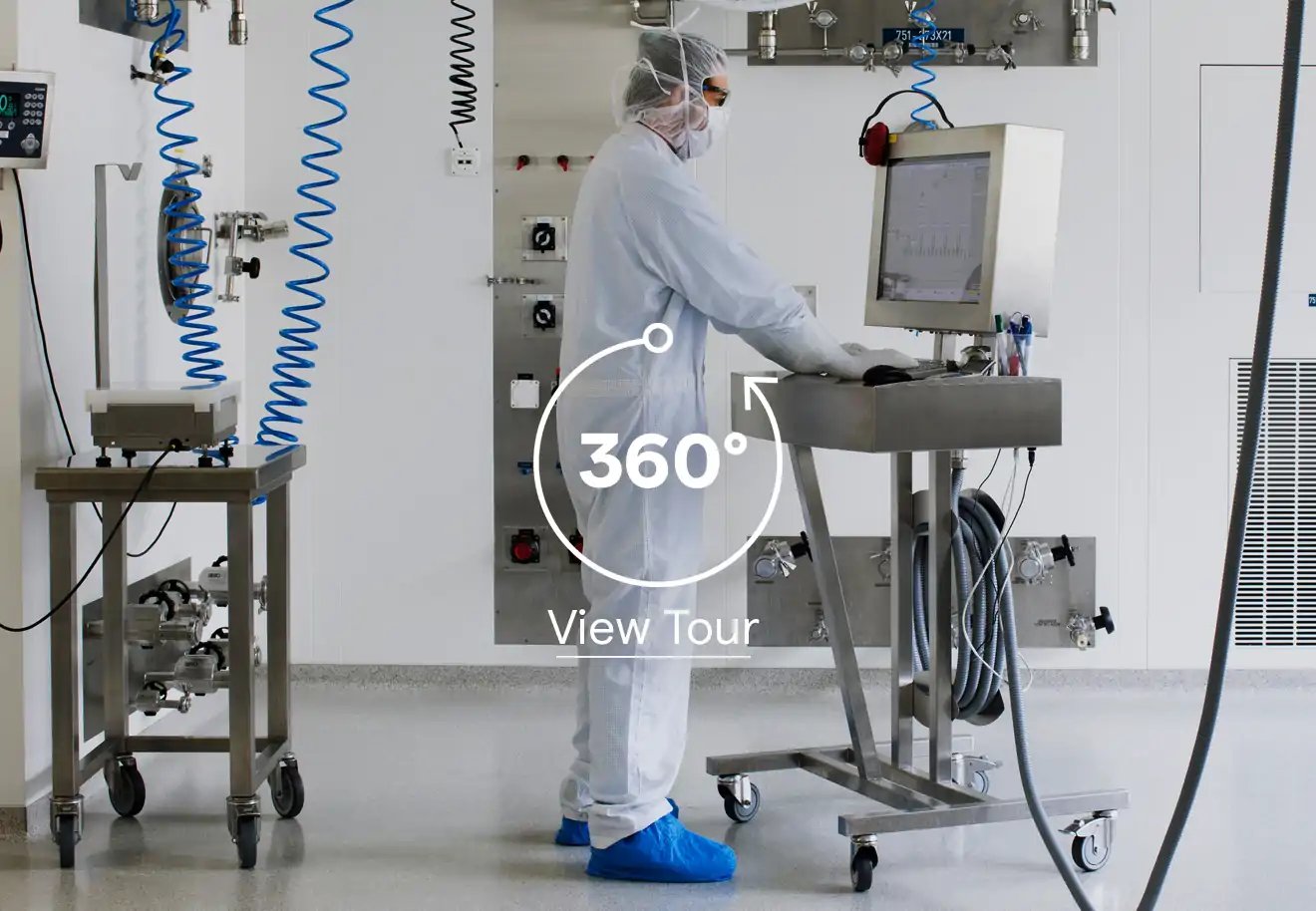
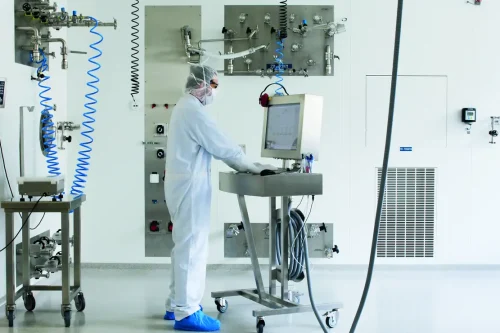
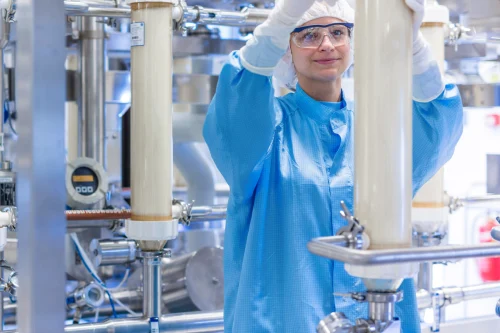
Virtual Tour: Bioconjugates Large Scale Manufacturing (Visp)
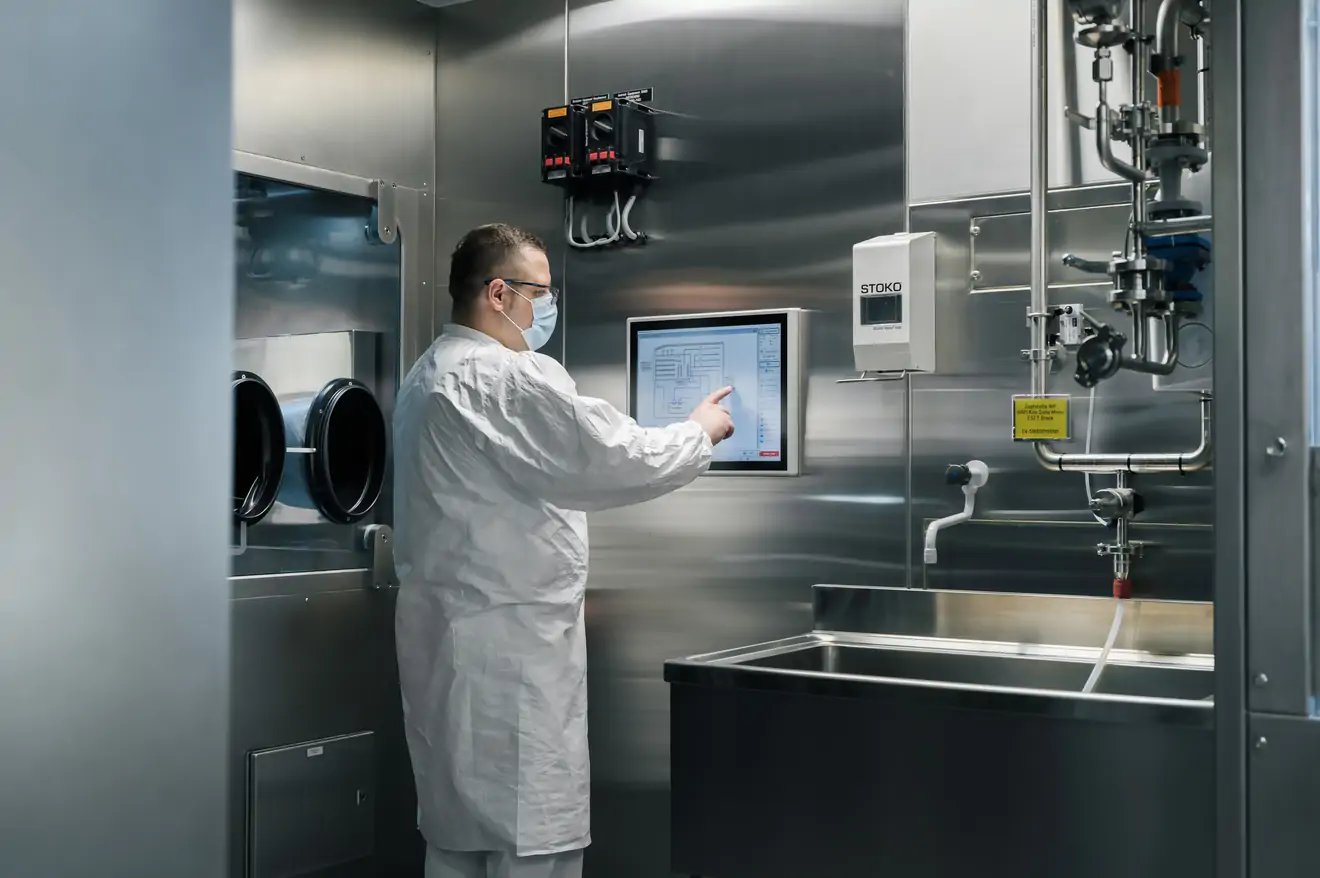
The extensive biologics contract development and bioconjugates CDMO services portfolio in Visp covers advanced technologies to quickly and efficiently deliver products. For Bioconjugates, comprehensive services in the technology areas of Small Molecules, Mammalian, Microbial, Bioconjugation, and Drug Product are available to provide an end-to-end supply solution with reduced complexity.
Our offering includes preclinical, drug substance, and drug product development. This Virtual tour presents bioconjugates manufacturing room examples in Visp, Switzerland. For more information and/or tours, please reach out to us or visit our Visp location page.
Frequently Asked Questions
Bioconjugation is the chemical process of linking two biological or synthetic molecules to create a single, functional product.
It commonly joins antibodies with small molecules, peptides, proteins or nucleic acids to improve targeting, detection, or therapeutic activity.
Purpose: targeted drug delivery, imaging, diagnostics, and biomaterials.
It commonly joins antibodies with small molecules, peptides, proteins or nucleic acids to improve targeting, detection, or therapeutic activity.
Purpose: targeted drug delivery, imaging, diagnostics, and biomaterials.
Bioconjugation typically relies on reactive functional groups found on biomolecules. The most common include:
- Amines (e.g., lysine side chains)
- Thiols (e.g., cysteine residues)
- Carboxyl groups (aspartic/glutamic acid)
- Carbonyl groups (aldehydes/ketones)
- Hydroxyl groups (serine, threonine, tyrosine)
- Azides and alkynes (for click chemistry)
These groups allow stable covalent bonding.
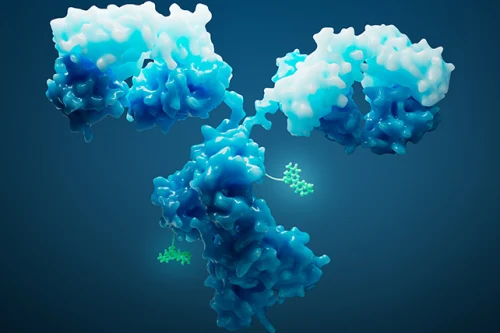
A well-known example of a bioconjugate is an antibody–drug conjugate (ADC), where a monoclonal antibody is chemically linked to a cytotoxic small-molecule drug.
Example: Trastuzumab emtansine (TDM1), used in HER2positive breast cancer.
Other examples: PEGylated proteins, antibody-siRNA, antibody-Protac conjugates.
Other examples: PEGylated proteins, antibody-siRNA, antibody-Protac conjugates.
ADC (antibody–drug conjugate) manufacturing involves:
- Antibody production – via mammalian cell culture and purification.
- Linker–payload synthesis – chemical creation of the cytotoxic drug and its linker, synthesis of highly potent payload and reactive linker.
- Conjugation – controlled chemical reaction attaching the linker–payload to the antibody at defined sites.
- Purification – removal of unconjugated species and by products.
- Formulation – stabilizing the ADC for storage and use.
- Quality testing – assessing DAR (drug to antibody ratio), purity, potency, and safety.