A significant number of emerging biologics are vulnerable to Post Translational Modifications (PTMs) and chemical or physical instability. PTMs can often impact your molecule's bioactivity and stability and can result in the production of different isoforms of your desired product.
While not all PTMs will result in high-risk issues, many have the potential to affect the manufacturability of your biologic. Aggregation represents another critical risk to biologic stability and manufacturability. It can arise at multiple stages of development and production, often manifesting as inclusion bodies, opalescent solutions, or precipitates that signal compromised stability and productivity.
Evaluating these structural modifications is essential for understanding a candidate’s overall stability profile.
If these issues are not addressed early, they can lead to costly delays, failed trials, or suboptimal therapies. A candidate that looks promising in theory may falter in practice due to poor developability or manufacturing challenges.
Building on the insights from PTM and aggregation assessments, we offer protein engineering strategies to transform liabilities into opportunities. Rather than stopping at detection, our Epibase® and in silico manufacturability platforms enable proactive optimization of your candidate.
These tools allow you to:
- Screen sequences for problematic features
- Identify beneficial substitutions
- Re‑engineer proteins for enhanced activity and stability
- Reduce immunogenicity through targeted design
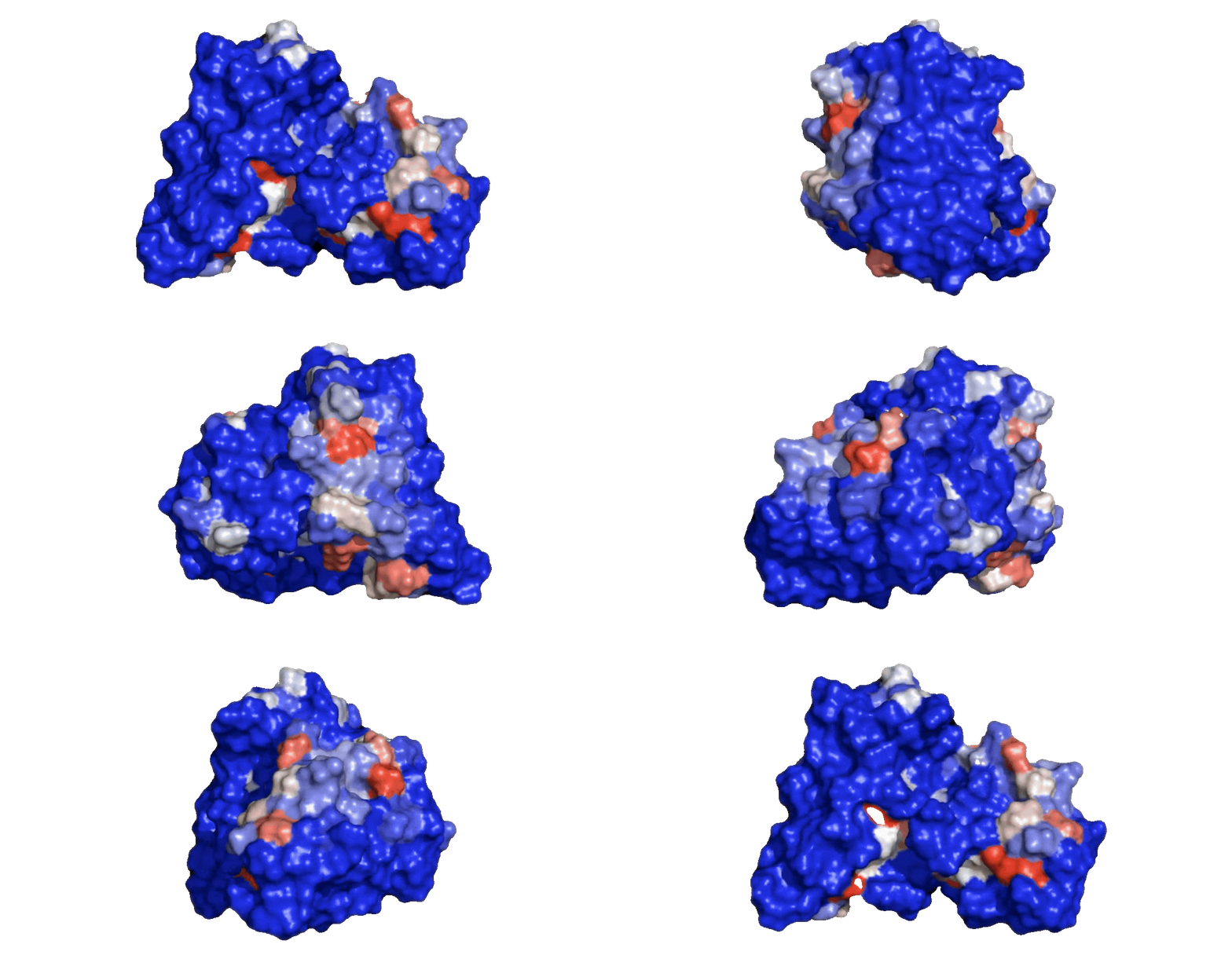
To proactively minimize potential clinical failure, our biologics manufacturability assessment can analyze all protein types, whether derived from mammalian or microbial expression systems, with just the sequence.
With our manufacturability assessment, you can;
- Perform targeted manufacturability assessment with proprietary in silico models screens sequences for PTM hotspots, chemical liabilities, and aggregation motifs.
- Rank risks by predicted impact on stability, activity, and manufacturability.
- Design sequence variants to mitigate high‑priority liabilities (e.g., substitutions removing labile residues or reducing aggregation motifs).
- Validate top variants via small‑scale expression and analytics for aggregation, PTM profile, stability and activity.
- Advance validated leads with a documented risk‑mitigation plan to reduce surprises and accelerate development.

To complement our predictive assessments, we provide tailored engineering programs designed to strengthen candidate performance. These include:
- Deimmunization strategies
- Fc fusion protein design
- Half‑life extension
- Manufacturability improvement
- Removal of high‑risk PTMs
- Reduction of aggregation hotspots
- Stability enhancement
Once optimized variants are designed, they can be expressed in customized programs aligned with your therapeutic objectives. This integrated approach allows engineered leads to progress with reduced risk, improved stability, and enhanced clinical potential that helps accelerate development while maintaining quality and manufacturability.
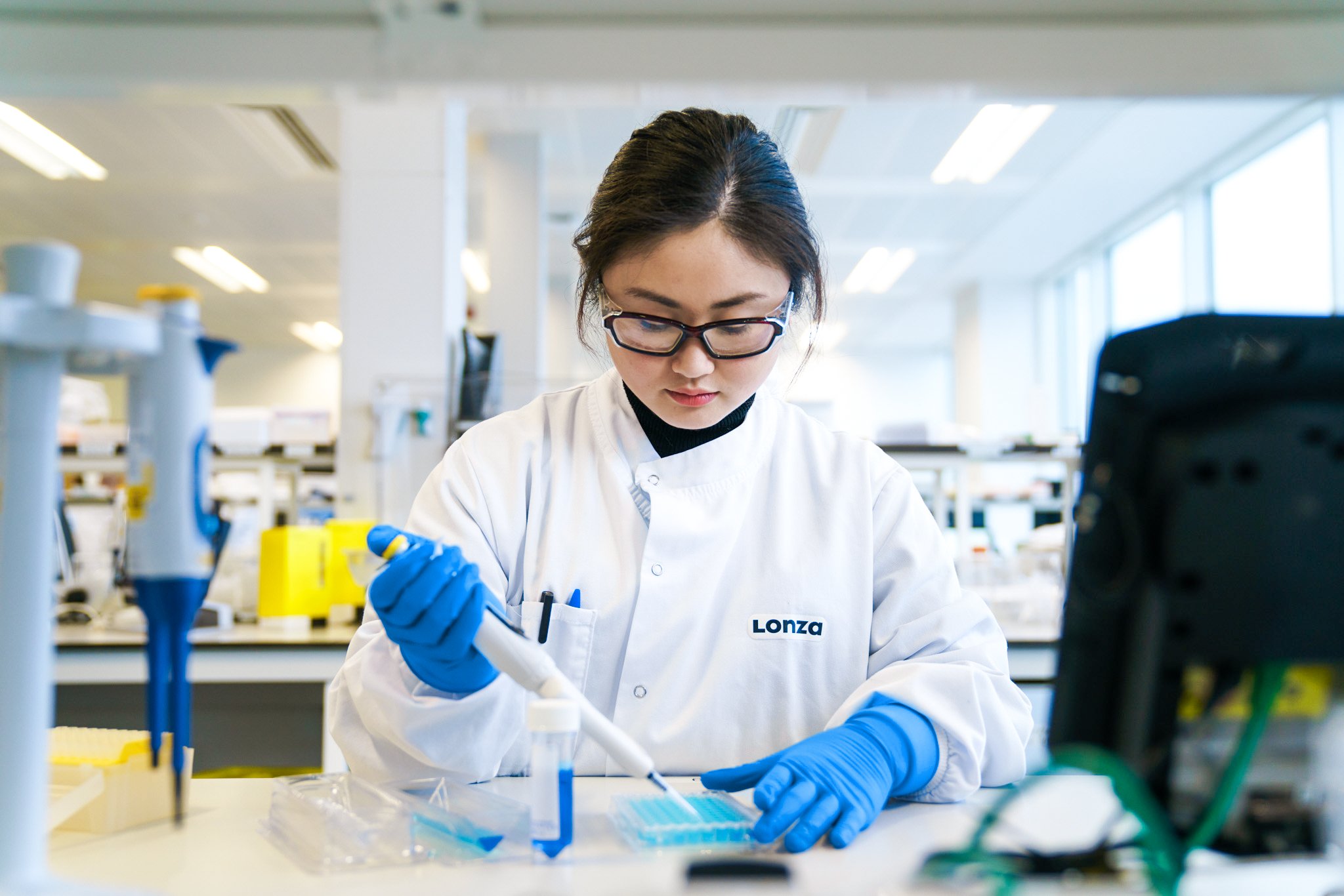
We design and optimize full-length antibodies and fragments to align with human germline frameworks, removing immunogenic regions, and avoiding risky post-translational modifications. Each variant is structurally modeled, expressed, and characterized to help achieve stability, binding affinity, and reduced immunogenic potential. Optional in vitro T cell assays help compare candidates and refine selection.
For deeper immunogenicity profiling, integrate the Epibase® platform’s T cell epitope screening as your early-warning system for unwanted immune responses.

Webinar: De-risking Your Journey to the Clinic
Join our expert presenter to learn how in silico and in vitro design and optimization tools can help you assess and mitigate risks, and how to optimize early expression and material supply processes to enable optimal developability of your candidate. These activities are designed to ensure that early process development efforts are focused on key developability challenges to minimize scale-up risk. Case studies will illustrate how these activities maximize the chances of success throughout your development journey.
Watch the on-demand webinarThe assessment is applicable to all protein types, whether derived from mammalian or microbial expression systems. Only the sequence is needed to begin the analysis.
Our assessment highlights high‑risk sites including deamidation, aspartate isomerization, oxidation (methionine and tryptophan), free‑cysteine thiols, glycosylation, and lysine glycation. These insights provide an overall view of long‑term stability and guide sequence optimization.
When risks are identified, our protein engineering team can redesign sequences to improve stability, reduce aggregation, and avoid problematic PTMs. This integrated workflow ensures candidates are optimized not only for efficacy but also for developability and large‑scale production.
Yes. Our approach combines in silico predictions with in vitro validation to confirm stability and manufacturability risks. This dual strategy accelerates development by providing regulator‑ready data and guiding knowledge‑based candidate selection.
Early integration of engineering ensures that promising molecules are not only effective but also manufacturable. This reduces development risk, accelerates timelines, and aligns candidates with therapeutic objectives.