By Nicholas Field, Ph.D.
MSAT Principal Scientist
|
Developing downstream processes for new molecular format (NMF) biologics poses unique challenges. High-throughput chromatography offers a powerful way to rapidly screen conditions and optimize purification strategies when conventional approaches are insufficient. “It has been very rewarding to have the opportunity to work on the development of these purification solutions, and I am extremely proud of the high-throughput screening capabilities we now have available at Lonza.” — Nicholas Field |
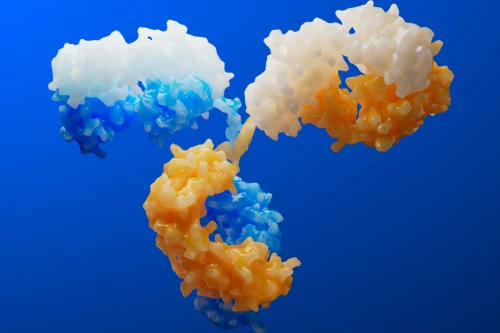
A growing challenge from our customers is to develop manufacturing processes and control strategies for new molecular format (NMFs) biologics. These NMFs represent a diverse range of molecules from antibody-based biologics such as bispecific antibodies and Fc-Fusion proteins, to hormones and blood factors fused to other motifs. Compared to monoclonal antibodies, these diverse classes of molecules are expected to have unknown characteristics and behave less predictably during development. As a CDMO, rapidly advancing downstream process development solutions for these therapeutic molecules on schedule and in a cost-efficient manner is of critical importance to our customers. Therefore, we deploy a flexible approach at Lonza in which we leverage our antibody platform downstream process whenever appropriate and augment our development process with high-throughput (HT) approaches to deal with specific challenges anticipated with particular molecules.
During my PhD, I was able to dedicate three years of my professional life purely concentrating on high-throughput chromatography methodologies, including the chemistry of purification science and the use of automation. Since leaving academia, my time at Lonza has been focused on a central goal of translating my knowledge and experience into developing a set of high-throughput capabilities and make them accessible to our teams to support customer program delivery. To achieve this, Lonza has designed these high-throughput purification development capabilities around four key cornerstones: technology, standardization, training and competence, and flexibility.
Technology in High-Throughput Chromatography
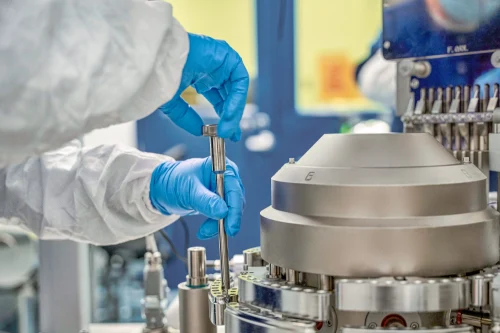
We have invested in three automated liquid handling systems at our site in Slough, which are capable of running liquid phase solubility screens as well as assessing resin filled plates and 600 µL chromatography mini columns pictured in Figure 1A. These hardware capabilities have been paired with a third party software solution, which allows the planning, operation, and analysis of these experiments in an integrated way, simplifying the execution of such experiments and facilitating efficient chromatography process development as described in Figure 1B.
Figure 1: (left) Automated liquid handling system injecting liquid phase into eight 600 µL pre-packed chromatography mini columns. Figure (right) An example workflow for the development of a mixed mode chromatography step using high-throughput techniques and a design of experiments (DoE) approach.
Standardization in Chromatography Chemistries
With the support of talented scientists within the Lonza Purification Development team, we have developed a suite of standardized screens for the development of different chromatography chemistries, including affinity, ion exchange, hydrophobic interaction, and mixed mode chromatography. Additionally, we have developed standard screens looking at the solubility and stability of products in different liquid phase conditions. These methods provide a toolbox of approaches that we can use to support the development of purification solutions for the molecule of interest.
Training and Competence in Purification Development
Due to the nature of the equipment, control software, and the large number of conditions tested at a given time, HT experiments can be complicated and error-prone if not completed by properly trained and competent operators. Therefore, to support projects, we have set up a sub-team of specialized HT operators who have been specifically trained in these screens and run them on a regular basis. Having a smaller, focused team helps to build competence as each individual member runs the screen more regularly than they would if we had a larger team. We also have Subject Matter Experts (SMEs) within the department who have a deeper level of experience and can troubleshoot issues or design non-standard experiments.
Flexibility for New Molecular Format Products
The inherent nature of new molecular format biologics dictates that one will not always achieve the desired outcome using a standardized screen, given the challenges presented by the molecule’s characteristics and product-related impurities, to name a few examples. In these situations, flexibility is required to bring about a successful outcome. The flexibility cornerstone rests on other capabilities in the HT space. For example, the third party software helps us to simulate bespoke experiments before they are performed, maximizing the chances of a successful outcome. In addition, the toolbox of screening methods available provide a comprehensive yet flexible suite of options to explore alternative chromatography chemistries and operating conditions. Therefore, our standard screens offer a jumping off point for augmentation when it is required on specific programs and our trained operators and SMEs can collaborate to design bespoke approaches when required.
It has been very rewarding to have the opportunity to work on the development of these purification solutions, and I am extremely proud of the high-throughput screening capabilities we now have available at Lonza. These solutions have only been made possible by the great collaboration shown across the team, including our R&D department, as well as third party suppliers and talented Lonza Purification Development scientists who performed the vital initial lab work to test and refine these capabilities. I am confident that using these four cornerstones, we have built a lasting foundation for the future success of downstream process development and continued progress in purification development, supporting our customers and the therapies they are developing for their patients.
About the author:
Nicholas gained a BSc in Biochemistry from the University of Leeds before working for 2 years in Analytical Development for a CDMO. He then completed his PhD in Biochemical Engineering after studying at University College London before he started his journey at Lonza in the Purification Development department where he spent 7.5 years. Recently, he started a new role in Manufacturing Science and Technology in order to gain more understanding of the GMP environment and how processes are run at scale.
|
|
Are you looking to bring your new molecular format to patients?Developing downstream processes for new molecular format biologics can be complex and time-sensitive. If you need support and guidance, don’t hesitate to reach out to a member of our team so that you may learn how we can support you in accelerating purification development and optimizing your chromatography strategy. |

 |