Small molecules remain central to pharmaceutical pipelines. From your perspective, what are the biggest changes in small molecule development today?
Firstly, it is good to acknowledge that Small Molecules remain central to pharma pipelines and, as such, continue to be dominant in FDA approvals. Small Molecules are very much alive. That said, as drug discovery is evolving, Small Molecule APIs are becoming increasingly complex. To bind to more challenging biological targets, larger molecules with more intricate three-dimensional shapes and varied functionality are often needed. Larger, more complex molecules are more difficult to synthesize and scale-up and also present a greater solubility, and thus bioavailability, challenge. Improved target selectivity can also lead to increased drug potency, presenting a further hurdle for development to overcome. There is also an increasing use of expedited regulatory pathways, with the majority of new drugs, particularly oncology drugs, utilizing at least one. Expedited pathways require shorter development timelines. So, today, the pharmaceutical industry is faced with the evolving challenge of developing more complex and potent small molecules with accelerated timelines.
Many development teams are focused on accelerating timelines and getting candidates into the clinic faster. What approaches are helping companies move programs forward more efficiently while still maintaining quality and regulatory compliance?
There is certainly an increased use of expedited regulatory pathways, with the majority of new drugs, particularly those for oncology and rare indications, using at least one. In general, working more closely with regulators will help to progress programs quicker. To accelerate progress, companies now often accept more risk, by conducting activities in parallel that would previously have been done in sequence. The use of AI and other computational tools can also enable quicker progress, for example in synthetic route identification and optimization.
Process development and scale-up remain major challenges for sponsors. Why are these stages so difficult?
Well, chemistry does not necessarily scale linearly. What is seen at laboratory scale is not always easy to replicate consistently in a manufacturing plant, particularly when operating according to cGMP guidelines. It may be necessary to completely redesign how a small molecule is made before you can safely and reproducibly manufacture it on commercial scale. It could simply be because the starting materials or reagents used by a medicinal chemist are not available in the quantities required for kg or ton scale manufacture or are too expensive to make the scale-up viable.
The increasing structural complexity of today’s small molecules continually adds to the scale-up challenge, particularly in the context of accelerated timelines.
In your experience, how important is early collaboration between sponsors and CDMO partners in improving development outcomes?
Its critical. CDMO’s have vast experience of small molecule development and typically maintain a strong interest in the latest chemistry technology innovations. Engaging early with CDMOs, can often help sponsors avoid time consuming pitfalls, speed up development and add significant value to their programs.
Technical expertise and quality are seen as the most important factors when selecting CDMO partners. How do you see that influencing outsourcing relationships?
Technical expertise and a commitment to Quality are “must haves” for a successful CDMO. It is difficult to see how a CDMO can operate without them – they are hygiene factors. The definition of technical expertise can be very broad and probably needs some unpacking to better understand what technical contributions sponsors truly value and how they can be differentiators for a CDMO. Is it innovative, and sometimes proprietary, technologies that are valued, or is it a broad array of technical capabilities across a wide range of scales? The most successful CDMOs will have both and more.
Quality is also definitely not an area to under-estimate when selecting a CDMO. Quality standards continue to rise, with sponsors facing increasing regulatory and commercial pressure to ensure robustness, compliance, and supply continuity. As a result, quality is no longer just about inspection readiness - it is about building confidence in long-term reliability and risk mitigation.
Together, these factors are increasingly shaping outsourcing relationships toward deeper, more strategic partnerships. Sponsors are moving beyond transactional engagements and instead selecting CDMOs who can act as true development and manufacturing partners, bringing not only technical execution, but proactive problem-solving, transparency, and continuous improvement. In this environment, differentiation comes from the ability to consistently deliver high-quality outcomes while applying expertise to accelerate timelines, de-risk development, and ultimately support successful commercialization.
Beyond technical expertise and quality systems, are there other capabilities or attributes that sponsors increasingly value in CDMO partners today?
There are many capabilities beyond just technical expertise and a commitment to Quality that are highly valued and CDMOs can contribute to a sponsors drug development. These would include innovative technologies, integrated services, global infrastructure, early development through to commercial manufacturing capabilities and strong ESG performance. Extensive Supply Chain and Program Management capabilities are often also critical for successfully executing programs on-time and within budget.
There's a growing interest in AI and data-driven tools. How are these technologies influencing small molecule development?
These tools are having a big impact on all aspects of small molecule drug discovery and development from target identification through molecular design to process development and optimization and I am sure this will only increase as time goes on. For example, in route design and process development, these tools enable faster decision making and reduce the need for laboratory based trial and error experimentation. When combined with certain robotic or other automated laboratory technologies, AI and data driven tools can have a significant impact on timelines.
Are you seeing any shifts in the types of small molecules entering development today—such as higher potency compounds or molecules with more complex chemistry—and how does that affect development strategies?
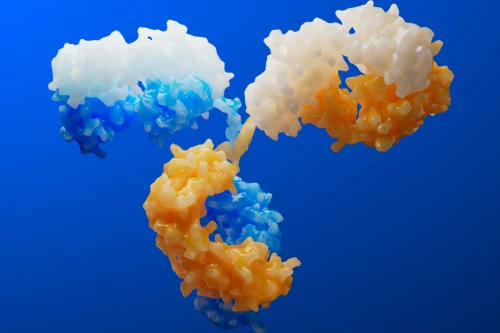
In short, yes, there is a clear shift towards larger, more structurally and synthetically complex small molecules entering development. This reflects researchers efforts to find drugs for more difficult biological targets. These molecules often have more stereo centers giving rise to greater 3-D character than historical drug candidates. Potency is also increasing, as molecules bind more selectively and for longer duration. A further significant shift affecting small molecules is the increasing numbers of “conjugated” small molecule drug substances entering pipelines. The most well known class are Antibody Drug Conjugates (ADCs). These are highly sophisticated molecules which “link” together a small molecule, often a toxin, and an antibody which when combined can make highly effective therapeutics. ADCs are by nature highly potent and complex, requiring the use of specialized facilities and expertise across both large and small molecules. Supply chains are long and careful planning is required for successful development.
Looking ahead, what broader trends do you believe will have the biggest impact on small molecule development over the next five to ten years?
Clearly, there will be increasing use of AI in all stages of discovery and development to help reduce rates of clinical failure and time to market. Pressure on timelines to enable faster patient access to new medicines will continue to grow and the use of expedited regulatory pathways will become the norm. To support accelerated timelines, the boundaries between discovery and process chemistry will be further broken down, with a much earlier consideration given to commercial manufacture. This will enable technologies such as flow chemistry to further establish itself as a standard approach in small molecule drug substance manufacture.
Finally, when companies are evaluating CDMO partners today, what capabilities should they prioritize to ensure long-term success as programs move from development through commercialization?
Firstly, companies should prioritize a potential CDMOs Quality and Regulatory track record. A strong compliance history with the major market regulatory bodies is a must have. Secondly, the breadth and depth of a CDMOs technical expertise. This is more than just the range of equipment they may have, but their ability to solve technical problems across a range of critical development and scale-up challenges, such as impurity control, crystallization, and solid-state chemistry. As molecular complexity is increasing, so must the technical expertise of CDMOs. Thirdly, there are non-technical skills that a CDMO also needs to excel at, for example budget control, supply chain and program management, communication transparency and ability to deal with the unexpected. These must all be taken into account when choosing a CDMO partner.